EA SPORTS FC 26 FC IQ Explained: How to Build Custom Tactics, Roles, and a Smarter Game Plan
FC 25 introduced a big shift in how tactics feel in-game, and the community quickly started calling it a “new era” for custom setups. The heart of that change was FC IQ—a tactical system built around smarter positioning, clearer roles, and more intentional team behaviour.
The important part for you (and why this article is updated for FC 26) is that FC IQ didn’t vanish after launch hype; it’s become the baseline language that tactics guides, pro players, and competitive meta discussions still revolve around going into FC 26.
Most articles out there do the lazy thing: they dump “best tactics codes” and hope you copy/paste. That’s fine if you just want something that works today. But if you want to win consistently—especially when EA drops a patch, the meta shifts, or your squad changes—you need to understand FC IQ like a manager, not like a code collector. That’s what this guide is for: a clear, FC 26-ready explanation of what FC IQ is, where you actually use it, and how to build custom tactics that fit your players.
And because this is GameCurrency, I’m also going to be real with you about the part no one says out loud: FC IQ is only as good as the players you can afford. When your squad can’t execute the roles you’re assigning, your “perfect tactics” turn into wide open gaps and clunky transitions. That’s exactly why people top up their team at key moments—if you’re planning upgrades, you can buy fc coins at the right timing and stop forcing your tactics to work with the wrong profiles.
What Is FC IQ (and What Changed From Older Tactics)?
FC IQ is EA’s newer tactical foundation that ties together team tactics, player roles, and “smart” behaviour that reacts to context in-game. EA’s own FC IQ overview (published through EA Help’s FC hub) describes it as a tactical upgrade that gives players more control over how their team behaves, rather than just sliding a few bars and hoping the AI interprets it correctly.
If you played older FIFA/FC titles, you’ll remember the classic cycle: pick a formation, change depth/width, maybe set “get in behind,” and then the match still felt like a coin flip depending on the AI mood. FC IQ aims to reduce that randomness by making the “job” of each position more explicit. When you pick a role for a midfielder (for example a deep-lying playmaker vs a box-to-box), you’re not just choosing vibes—you’re telling the game which spaces that player should value, what decisions they prioritise, and how they behave without the ball.
FC 26 tactics coverage from major guides continues to frame the system this way: tactics aren’t only formation + pressure anymore; it’s also role-driven behaviour that defines how your structure holds up when you lose possession, and how your team moves when you win it back.
FC 26 vs FC 25: What To Expect This Season
Here’s the clean way to think about it: FC 25 introduced FC IQ; FC 26 is about refining how you use it. Recent FC 26 tactics write-ups still emphasise role selection and tactical structure as the core advantage you can build around (rather than a single “best formation” that magically wins).
You’ll also notice more guides talking about the idea of different gameplay “feel” depending on mode and setting (Competitive vs more authentic pacing). Even if you don’t obsess over presets, the practical takeaway is simple: you should test your tactics in the mode you actually play most. A tactic that feels perfect in one environment can feel slow or exposed in another, especially if your defending relies on auto-cover.
Where FC IQ Lives: Finding the Tactics and Roles Menus
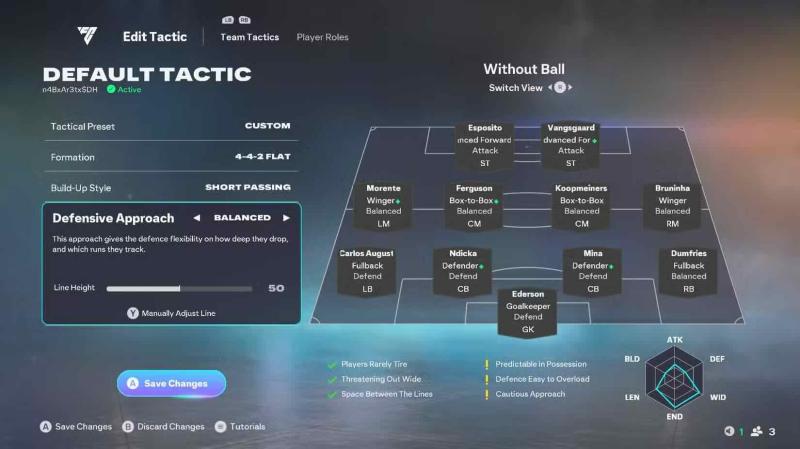
In FC IQ conversations online, people say “tactics” but they often mean three different things: the formation shape, the team behaviour settings, and the individual role behaviour. You’ll usually manage these inside the tactics/team management area, where you can edit your tactic, assign player roles, and save variations. Many FC tactics guides also highlight that you can share and import tactics via a code system, which is why tactics “codes” spread so fast in the community. | FIFA Ultimate Team
That import code feature is useful, but don’t let it make you lazy. The best way to use codes is as a starting point, then adjust it based on your squad. If your striker can’t turn, don’t copy a system that requires quick one-touch layoffs. If your fullbacks have no stamina, don’t copy a setup that demands constant overlap.
Building Your First FC IQ System (The Way Pros Actually Think)
Instead of starting with “what’s the best formation,” start with this question: How do I want to score, and how do I want to defend when I lose the ball?
If you want to score through wings, you need width, support runs, and roles that create triangles on the flank. If you want to score through the middle, you need a stable pivot and at least one midfielder whose role naturally occupies the half-spaces. If you want to defend aggressively, you need roles that help you win the ball back quickly without dragging your back line into chaos. That’s why FC IQ is powerful—roles are basically your team’s “default decisions” when you’re not manually controlling every runner.
A good FC 26 baseline (and you’ll see this echoed in multiple tactics articles) is to pick a balanced shape that doesn’t collapse when you lose possession. The reason 4-2-3-1 keeps showing up in FC 26 tactics talk is because it gives you two central mids to stabilise transitions and a natural line of three to press and create.
But you don’t have to marry that formation. The point is the logic: a stable rest-defence plus clear attacking lanes.
Player Roles: The “Invisible Settings” That Decide Your Match
FC IQ roles are where your tactic becomes real. Two teams can run the same 4-2-3-1 and play completely differently depending on roles and instructions. This is also where many players accidentally sabotage themselves: they assign attacking roles everywhere, then wonder why they concede counters like crazy.
If you want a reliable FC 26 structure, think in layers. Your back line should have at least one player whose role is focused on safety and positioning, not hero ball. Your midfield should have a clear divider: one player whose job is to protect the team when attacks break down, and another who supports progression. Your attack should include at least one player whose role pulls defenders out of shape (either with wide runs, inside movements, or dropping into pockets).
Community explainers break down FC IQ into these tactical pillars—roles + team tactics + smart behaviour—because that combination is what creates patterns, not random chaos.
Here’s the GameCurrency way to apply it: if you concede a lot of counter goals, your issue usually isn’t “defence settings.” It’s that your role selection leaves you with too few bodies behind the ball when you lose it. Fix the roles first, then tweak team tactics.

Custom Tactics in FC 26: How To Adjust Without Overcomplicating It
A lot of FC players think “custom tactics” means changing everything. It doesn’t. The highest win-rate improvements usually come from small changes you can feel immediately: how high your line sits, how quickly you transition, and whether your wide players help you defensively.
The biggest trap is cranking up aggression because it “feels intense.” High press setups can be lethal, but they’re also the fastest way to get cooked if your team lacks stamina, your defenders aren’t fast enough, or you’re manually pulling players out of shape. A clean high press works best when your midfield roles support it—meaning you’re not pressing with attackers while your midfield is strolling. FC IQ helps here by making pressing patterns more consistent when roles align with your plan.
On the other side, if you play possession and still lose the ball constantly, your issue is usually spacing. You might need one role that stays wider to stretch the pitch, or a midfielder role that offers safer passing lanes. That’s why copying a “meta code” often fails—your players don’t have the same passing and dribbling profiles as the streamer’s squad.
This is also where coins become relevant in a non-salesy way: roles are easier to execute when you have players that fit them. If you’re trying to run role-heavy tactics but your squad is stuck on cheap early-cycle cards, it can feel like the tactic is broken when it’s really the personnel. When you’re ready to upgrade the right pieces, cheap fc coins can help you build role-fit squads instead of forcing awkward compromises.
Two Real Match Scenarios (So You Can “Feel” FC IQ Working)
Imagine you’re playing against a high-line opponent who keeps sending fullbacks forward. In older games, you’d rely on “get in behind” and hope your winger runs at the right time. With FC IQ role-driven behaviour, you can design a system where your wide players naturally threaten space in transition while your midfield stays compact enough to win second balls. That means you’re not manually triggering every run; your team shape is built to punish that opponent.
Now flip it. You’re playing someone who sits deep and blocks the middle. In those games, endless through balls won’t work. What wins is structured patience: width, recycling possession, and roles that arrive late at the edge of the box instead of standing flat on the defensive line. Many FC IQ tactics guides point out this “role + structure” approach because it’s what turns random possession into repeatable chances. | FIFA Ultimate Team
Importing Tactics Codes: Useful, But Don’t Become a “Code Addict”
Yes, tactics codes are everywhere, and yes, some of them are genuinely strong. FourFourTwo even published a guide listing multiple FC IQ tactics codes and how to apply them in Ultimate Team.
But here’s the problem: most players import a code, lose two matches, then import another. They never learn why something works, so they can’t fix it when a patch changes movement or defending.
If you import a code, do one simple thing: play five matches and only change one variable at a time. Maybe your defensive line is too high—adjust that. Maybe your wide mids are not tracking—change their role focus. When you change everything at once, you learn nothing.
The GameCurrency “Tactics + Team-Building” Loop (This Is Where People Level Up)
Here’s the loop we see from players who improve fast: they build a tactic that fits their style, then they upgrade their squad to fit the tactic—not the other way around. Once you’ve got a stable system, you can identify which positions are “breaking” your plan. Maybe your CDM can’t intercept. Maybe your striker can’t hold the ball. Maybe your fullbacks run out of stamina because your roles demand constant movement.
That’s the moment to upgrade deliberately instead of randomly. If you’re doing it, do it with purpose: you’re not just “buying a player,” you’re buying a role execution upgrade. When you want to upgrade quickly and keep momentum, instant fc coins delivery is the cleanest way to skip the slow grind and actually enjoy the tactical side of FC 26.
If you want EA’s own explanation of FC IQ, start with the official EA Help FC IQ overview. It’s the closest thing to a “definition” from EA’s side and helps clear up what FC IQ is supposed to do.
EA Help: What is FC IQ in EA SPORTS FC 25?
For FC 26-specific tactics discussion that reflects current-season thinking (formations, roles, and how Competitive play tends to behave), Red Bull’s FC 26 tactics article is a solid reference point.
Red Bull: Best tactics and formations in EA FC 26
Conclusion: FC IQ Isn’t a Feature—It’s the New Language of Winning
FC IQ isn’t a gimmick and it’s not just a menu. It’s the system that decides how your team behaves when you’re not manually controlling every run, every press, every recovery. The players who climb divisions consistently aren’t just “better at dribbling.” They run a shape that protects them, roles that create patterns, and a tactic that fits their squad—not a tactic they copied and prayed over.
If you take one thing from this article, take this: build a system you understand, then upgrade your squad to execute it. That’s how you get tactical consistency—and consistency is what wins in FC 26.